
IDEXX Cancer Dx testing
A revolutionary new cancer diagnostic for dogs that detects lymphoma earlier than ever is now available.¹
Find cancer early. So you can fight it early.
Cancer is a leading cause of death in canines.² With 62% of pet owners in Australia interested in having a cancer screening test for their pet, now you can offer them one.³
The revolutionary technology behind IDEXX Cancer Dx testing detects a proprietary, circulating biomarker specific to canine lymphoma, accurately detecting lymphoma in at-risk dogs.†¹
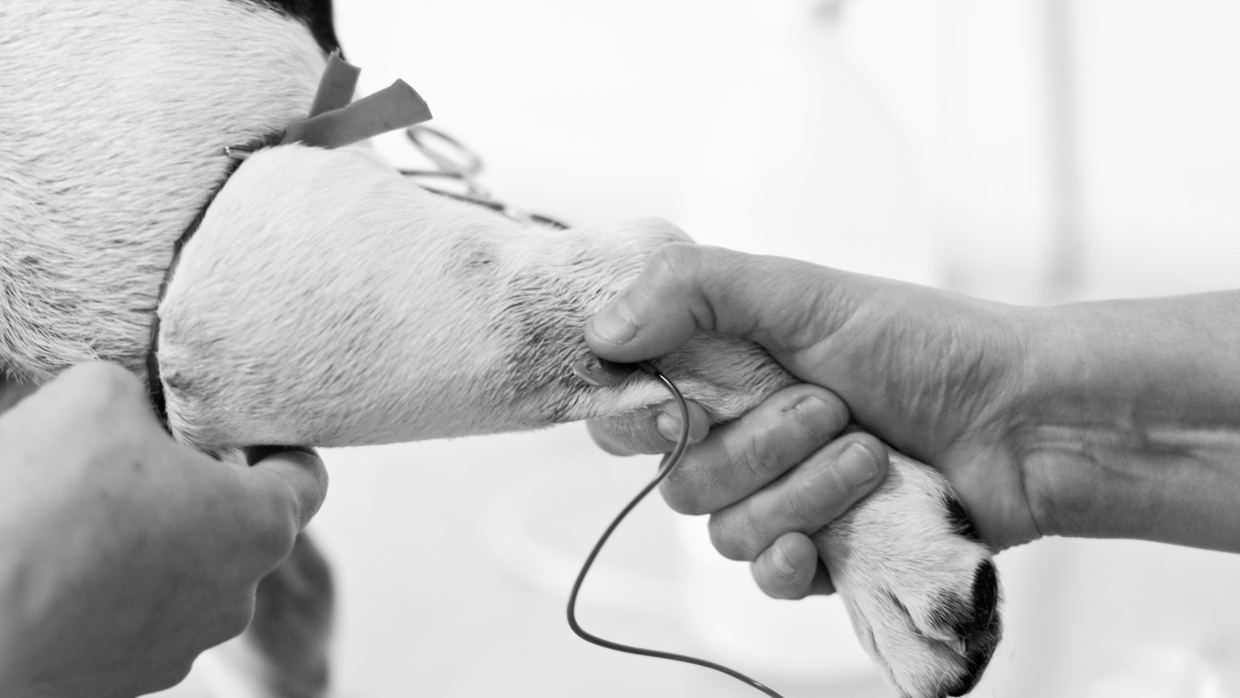

Detect and specifically identify lymphoma with a simple blood specimen.¹

According to early data, IDEXX Cancer Dx testing can detect lymphoma before clinical signs are present.¹

Can be affordably and easily incorporated into testing for sick pets and IDEXX Preventive Care profiles for at-risk dogs.†

Actionable next-step guidance developed by world-class oncologists.
Early. Accurate. The first of its kind.
With 79% sensitivity and 99% specificity rates,¹ IDEXX Cancer Dx testing demonstrates performance that is comparable to, if not superior to, the current standards widely and consistently used in human cancer screening diagnostics today.⁴ IDEXX Cancer Dx testing also provides a lymphoma-specific result with additional characterisation in a portion of cases at no additional cost.
In many cases, B-cell vs. T-cell phenotype classification will be provided with positive results at no additional cost.
Detecting lymphoma earlier is just the beginning.
IDEXX Cancer Dx testing accurately and specifically detects lymphoma. And that’s just the beginning. In the coming years, we plan to add detection of more of the most common canine cancers.

We're adding deeper insights to your preventive care offering.
Cancer Dx testing can be easily and affordably added to IDEXX Preventive Care profiles for at-risk dogs.† IDEXX Preventive Care helps you tailor recommendations for every patient's needs. It's a comprehensive solution that includes a team of experts and powerful tools to spot trends and interpret patient results.
Learn moreBefore you can fight lymphoma, you have to find it.
We recommend screening at-risk dogs, including all dogs aged 7 years or older and dogs of high-risk breeds—especially the breeds listed below—aged 4 or older.
| Beagle Bernese mountain dog Boston terrier Boxer Bullmastiff Chinese pug Doberman pinscher English bulldog Flat-coated retriever French bulldog German shepherd Golden retriever |
Irish wolfhound Labrador retriever Miniature schnauzer Pembroke Welsh corgi Rhodesian ridgeback Rottweiler Scottish deerhound Scottish terrier Shar-pei Siberian husky Weimaraner |

Put our oncology portfolio to work.
We've developed a full suite of diagnostic tools for treatment, monitoring, management and support for every stage of veterinary oncology.
IDEXX oncology portfolioSupport
Resources
Access IDEXX Cancer Dx testing resources, including our white paper, testing algorithm and FAQs.
Tests and services
See a comprehensive list of offerings from IDEXX Reference Laboratories.
Medical consultants
Direct live access and personalised guidance from our team of IDEXX experts, including our Diagnostic Support Veterinarians and board-certified veterinary specialists.
†At-risk dogs include all dogs ≥ 7 years old and high-risk breeds ≥ 4 years old.
References
- Data on file at IDEXX Laboratories, Inc. Westbrook, Maine USA: Data based on testing performed at IDEXX Reference Laboratories in North America between November 1, 2024, and December 6, 2024. Analysis Report: IDEXX Cancer Dx Validation, 100282 [008_CancerDx-Validation-Report-2.Rmd].
- What are the most common types of cancers in dogs? How many dogs typically get cancer? Veterinary Cancer Society; 2021. Accessed December 15, 2025.
www.vetcancersociety.org/pet-owners/faqs - Data on file at IDEXX Laboratories, Inc. Westbrook, Maine USA: IDEXX quantitative research with dog owners, February 2025 (n = 190 and 202).
- Pisano ED, Hendrick RE, Yaffe MJ, et al. Diagnostic accuracy of digital versus film mammography: exploratory analysis of selected population subgroups in DMIST. Radiology. 2008;246(2):376–383. doi:10.1148/radiol.2461070200