Faecal Dx antigen testing
For early, accurate detection of the most common, clinically relevant intestinal parasites—even before eggs are present.1–3

Bad news for parasites.
Parasites are an ongoing hazard to the health of both pets and sometimes their human family members. Pets can be at risk simply by being outside. Some parasites can burrow into a pet’s feet or skin. Pets can also swallow parasites while grooming, nursing or eating contaminated soil or faeces. Regular faecal testing can help detect parasites sooner, which means earlier treatment and better outcomes.
Now available: taeniid tapeworm detection.
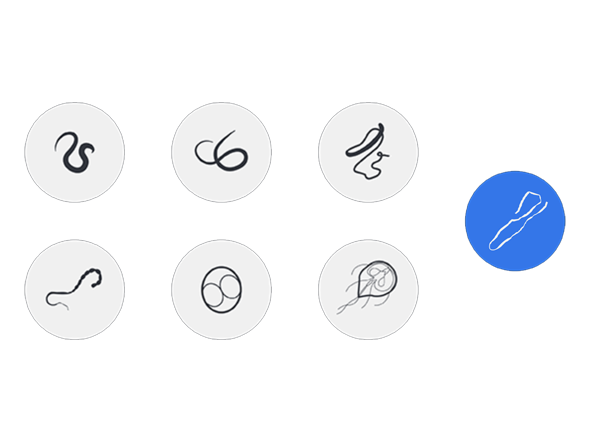
The addition of the new taeniid tapeworm antigen accurately detects the presence of Taenia crassiceps, Taenia pisiformis, Taenia taeniaeformis, Echinococcus granulosus and Echinococcus multilocularis. This enables you to develop targeted treatment and prevention plans to set you up for success.
The future of parasites is they have no future.
It’s true. Faecal antigen testing is the future of parasite screening as we know it, catching up to 2x more infections. And now, after a retrospective study of nearly 900,000 cases that compared faecal antigen testing to flotation, we have the data to prove it.5
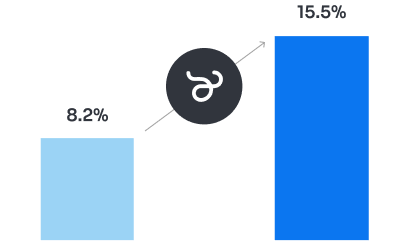
Detect up to 2x more infections earlier than fecal flotation.5†
See how early detection works.
Watch our video for greater insights on antigen testing.

Diagnosing intestinal parasite infections.
For a more in-depth look at parasite life cycles, how they present, CAPC recommendations, how to minimise the threat of infection and much more, download our clinical reference guide.
Download nowReferences
- Elsemore D, Bezold T, Geng J, Hanna R, Tyrrell P, Beall M. Immunoassay for detection of Dipylidium caninum coproantigen in dogs and cats. J Vet Diagn Invest. 2023;35(6):671–678. doi:10.1177/10406387231189193
- Elsemore DA, Geng J, Flynn L, Cruthers L, Lucio-Forster A, Bowman DD. Enzyme-linked immunosorbent assay for coproantigen detection of Trichuris vulpis in dogs. J Vet Diagn Invest. 2014;26(3):404–411. doi:10.1177/1040638714528500
- Elsemore DA, Geng J, Cote J, Hanna R, Lucio-Forster A, Bowman DD. Enzyme-linked immunosorbent assays for coproantigen detection of Ancylostoma caninum and Toxocara canis in dogs and Toxocara cati in cats. J Vet Diagn Invest. 2017;29(5):645–653. doi:10.1177/1040638717706098